 Made in the USA
Service and Training Programs

Customer Tailored Service defines our value to customers “Precision fastening solutions backed by over a century of industrial innovation and reliability”
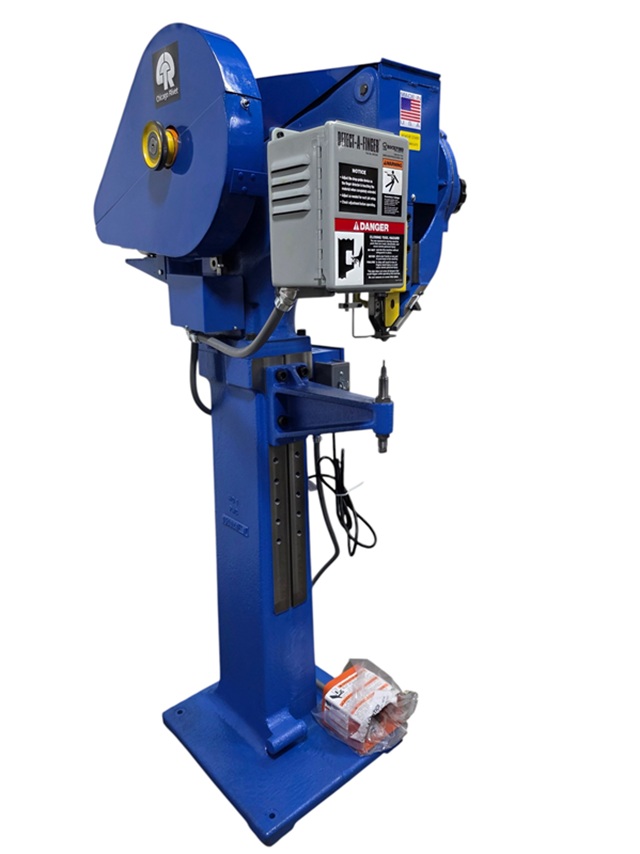
If you are having a machine or tool problem, give us a call. In many situations, we can resolve the problem over the phone or recommend a replacement part. For many of our standard riveters such as the model 450 and the 912, many replacement parts are in stock. Some common parts are clutch components, relays, solenoids, and parts for your safety equipment-to name just a few- and can be shipped to arrive at your shop the next day. We can also assist you over the phone should you have any questions regarding the installation of a particular part, to help minimize your down-time and costs as well. There may be cases where a visit to your facility is needed. We can respond by dispatching an experienced Chicago Rivet & Machine Co. Service Technician in a timely manner. Our technicians can review your preventative maintenance program, train operators on proper set up, and ensure your machines are running efficiently.
Service & Onsite Support Options:
NOTE: We only service Chicago Rivet machines that are less than 20 years old.
Our Tech visits are based on the following:
- Travel time @ $100.00/hour
- In plant time @ $150.00/hour
Charges for Air fare, rental car, meals, and lodging are billed at cost following the visit.
A purchase order is needed to schedule the visit.
Lead time to schedule a technician visit is minimum 4 weeks for scheduling
Key wear items on your rivet setting machine include:
- Drivers – There is a high level of Impact on each rivet setting stroke. Ensure your drivers are aligned and adjusted properly per the dimensions in the maintenance manual. Make sure your driver tip is not chipped or worn, and the driver is not bent.
- Jaws – Used for aligning the rivet before setting on the Anvil. Make sure your jaws are flush, even, and adjusted fully in the proper orientation to the rivet feeder track. Make sure the pairing number on the jaw pockets match.
- Anvil – The anvil rolls the rivet back on itself and needs to be properly aligned. Longer anvils tend to have play or lateral movement in them, ensure that hardened materials are used to limit movement during setting. Make sure the top of the anvil and the pilot are not damaged or worn.
- Feeder Bowl and Tracks – Clean tracks periodically depending on air quality and contamination on them. Rivets need to slide freely down the tracks into the Anvil. Assure that the track is adjusted to the proper distance from the driver and jaws. Ensure the feeder bowl is tightened and there is no lateral play in it.
- Motors, Relays, Belts, Switches, and Controls – Generally only require attention if there is an obvious failure or damage.